“Glitch”
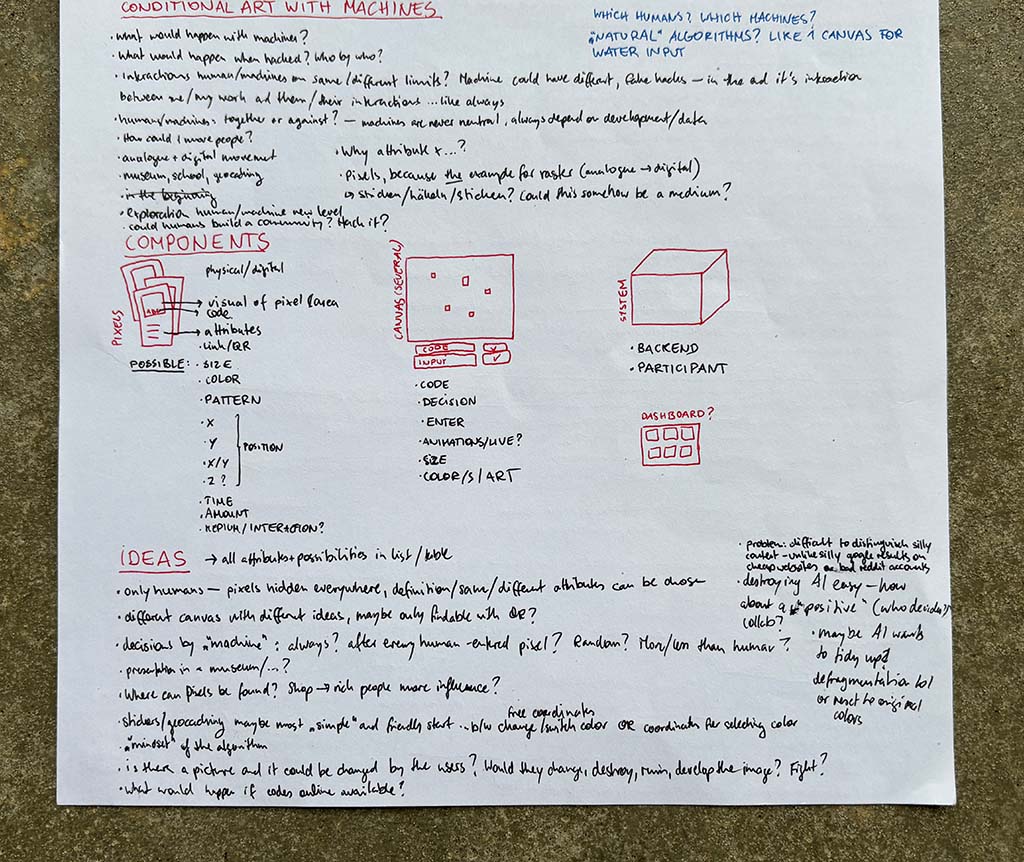
Glitch is a speculative participatory system exploring what happens when humans act within rule-based structures that resemble computational logic, but remain open to interpretation, deviation, hacking and error.
The idea asks a simple yet unstable question: Can humans behave like machines – and if so, would they choose to? Based on earlier experiments such as Conditional Design with Triangles (2015) and Conditional Design with Trees (2016), Glitch extends this logic into systems where human and machine agency intersect. While machines operate through fixed conditions, human participants introduce ambiguity, misinterpretation and intentional rule-breaking.
- I define the conditions.
- Participants perform actions.
- Machines execute processes.
- Results emerge – unpredictable, collaborative or conflicted.
I imagine a hybrid system in which pixels function as both analog and digital building blocks. Participants collect physical cards containing coded attributes to shape evolving online canvases. In parallel, machines continuously transform these structures through predefined or randomised conditions.
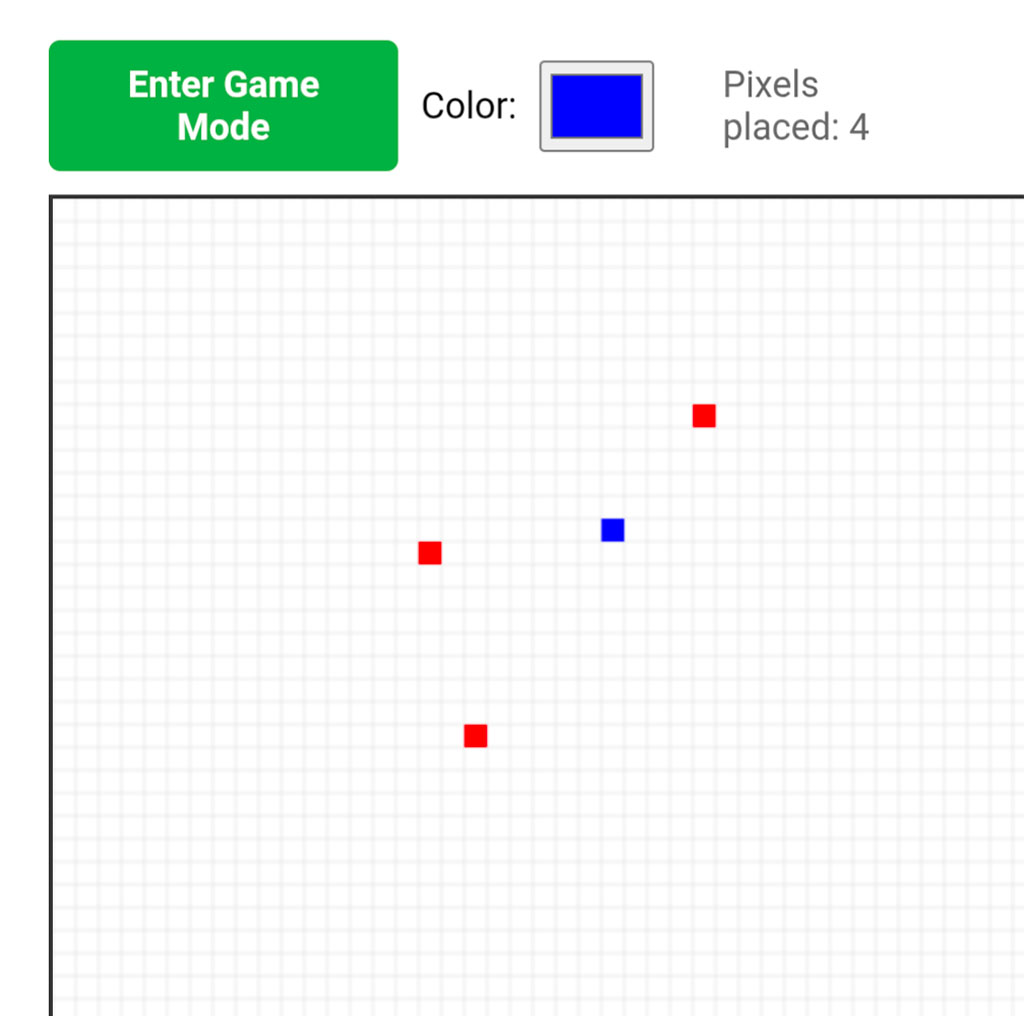
The “glitch” is not treated as an error to be corrected, but as a productive moment in which rule-based systems fail, shift or become visible. Rather than asking whether machines can become more human, the project reverses the perspective: What happens when humans temporarily adopt machine-like constraints – and what forms of creativity emerge from that tension?